
By The PPH Foundation
The fight against postpartum haemorrhage is being reshaped by a wave of practical and transformative innovations that combine simplicity, affordability, and effectiveness. Across Kenya and the wider global health community, new tools and technologies are giving health workers the power to detect, prevent, and manage excessive bleeding more effectively, saving lives even in low-resource settings.
For decades, the management of postpartum haemorrhage, or PPH, relied mainly on oxytocin and manual clinical techniques. But in recent years, global researchers, the World Health Organization, and partners such as FIGO have championed new approaches that are making a measurable difference. Among the most impactful are the calibrated blood-collection drape, the uterine balloon tamponade, the Non-Pneumatic Anti-Shock Garment (NASG), and heat-stable uterotonic medicines such as carbetocin.
One of the biggest breakthroughs is the calibrated drape, a simple but life-saving innovation that allows accurate measurement of blood loss immediately after childbirth. For decades, health workers relied on visual estimates that often undercounted blood loss by up to a third, leading to dangerous delays in diagnosis. The calibrated drape, used under the mother during delivery, measures blood loss in millilitres, enabling early action before bleeding becomes severe. In Kenya, this tool has been introduced in several counties including Makueni, where it has dramatically improved early detection and response.
Prof Moses Obimbo Madadi, The PPH Foundation Project Lead, says the best innovations are those designed for real-world challenges. “In many rural hospitals, lack of blood supplies, unreliable electricity, and staff shortages have forced health workers to think creatively,” he notes. “The most effective tools are simple, durable, and easy to use where resources are limited.”
The calibrated drape forms part of the new WHO-recommended E-MOTIVE bundle, which encourages health teams to act immediately when bleeding reaches 300 millilitres or when the mother’s vital signs begin to change. Instead of applying treatments one after another, the bundle promotes simultaneous action, giving a uterotonic drug, performing uterine massage, administering tranexamic acid, starting IV fluids, and escalating care if bleeding persists. Trials across Africa, including Kenya and Uganda, have shown that this approach can reduce severe bleeding by nearly 60 percent.
Another major innovation is the uterine balloon tamponade (UBT), a device inserted into the uterus and inflated to apply pressure that stops bleeding when medicines fail. Locally made versions, using a simple condom and catheter assembly, are now being distributed through Ministry of Health pilot programmes with support from international partners. Evaluations in Kenya and Uganda have shown that UBT can reduce the need for surgery by up to 60 percent, giving mothers a second chance when advanced care is not immediately available.
The Non-Pneumatic Anti-Shock Garment (NASG) has also proven revolutionary in stabilising women experiencing severe blood loss. The reusable lower-body suit applies pressure that redirects blood to vital organs, buying time for transport or further treatment. Studies in Kenya, Nigeria, and Ethiopia show that NASG use can cut maternal deaths by half in emergency settings where referral delays are common.
Heat-stable carbetocin, another WHO-approved uterotonic, has transformed prevention efforts by eliminating the need for refrigeration. Unlike oxytocin, which requires a cold chain, carbetocin remains effective at room temperature, making it a game-changer for rural clinics. In Makueni County, where this innovation has been combined with calibrated drapes and the bundle approach, health facilities have recorded zero PPH-related deaths for two consecutive years.
Dr Frederick Kireki Omanwa, Consultant Obstetrician and Gynaecologist and President of the Kenya Obstetrical and Gynaecological Society, emphasises that technology must be matched with capacity. “A device is only as effective as the person using it,” he says. “We must train and empower every health worker to recognise bleeding early and use these innovations confidently.”
Digital tools are also becoming part of the PPH response. Dr Eunice Atsali, midwife and maternal health advocate at the PPH Foundation, notes that mobile applications are helping providers record blood loss, call for rapid support, and share real-time updates with referral hospitals. “These digital tools connect frontline teams with supervisors,” she says, “ensuring decisions are made faster and women get the help they need in time.”
Kenya has emerged as a regional leader in testing and scaling maternal health innovations through partnerships between the Ministry of Health, the PPH Foundation, and international research groups. However, as Prof Obimbo reminds us, “Innovation alone is not enough. We must ensure equity, that these technologies reach every woman, not just those in major hospitals. Only then can innovation truly save lives.”
The lesson is clear: postpartum haemorrhage is preventable. Through practical innovations, smart technology, and committed health workers, Kenya is showing that with the right tools, every mother can be given a fair chance at survival.
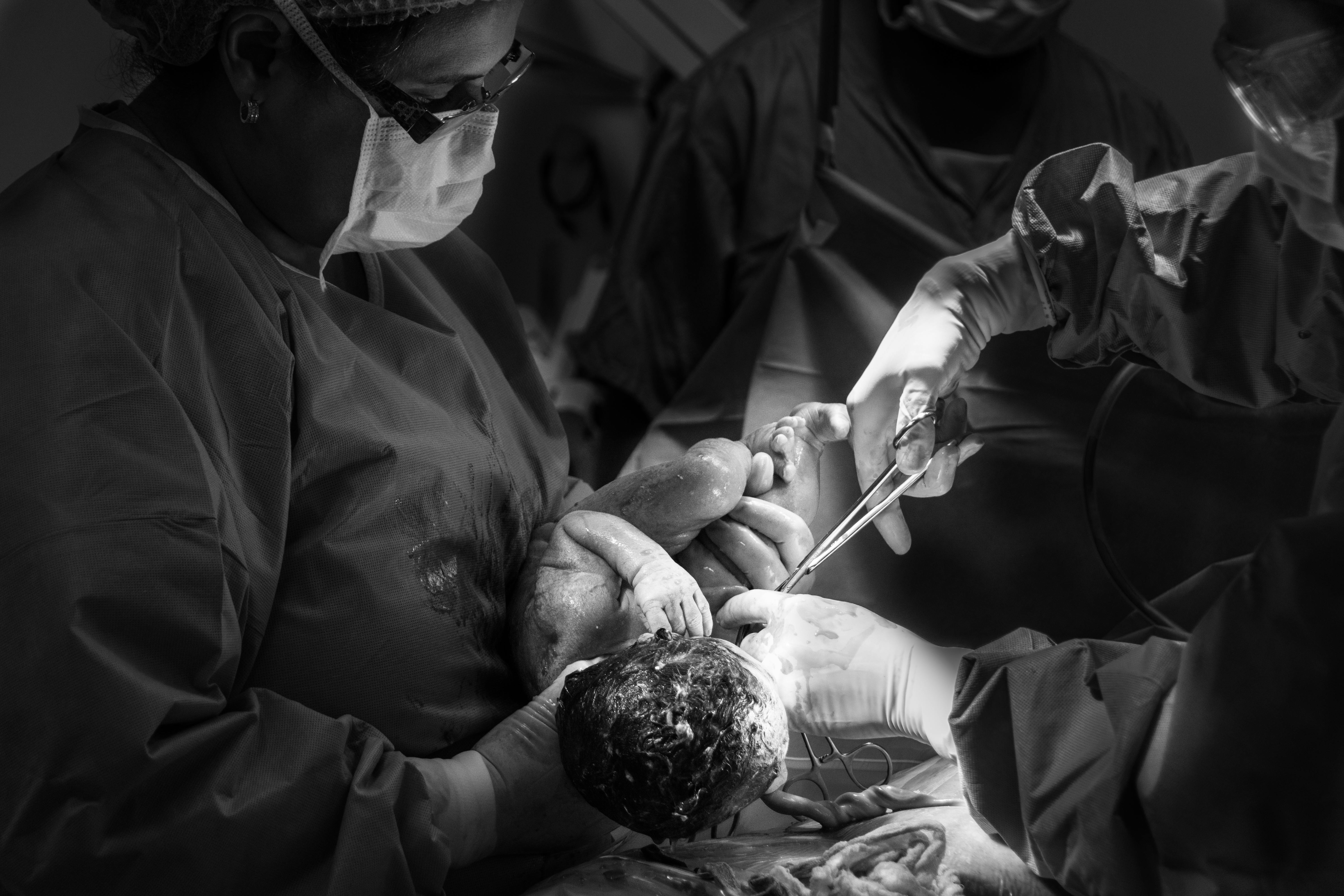
Photo by Jozemara Friorili Lemes: https://www.pexels.com/photo/grayscale-photography-of-doctor-carrying-baby-3472534/
Sources
• World Health Organization, WHO Recommendations on Uterotonics and PPH Management, 2023
• FIGO, Heat-Stable Carbetocin Technical Brief, 2023
• The Lancet, The WOMAN Trial, 2017
• PATH, Evaluation of Non-Pneumatic Anti-Shock Garment Programs, 2022
• Kenya Ministry of Health, Maternal Health Innovation Report, 2024
• Africa Solutions Media Hub, 2025
• PPH Foundation Expert Interviews, 2025